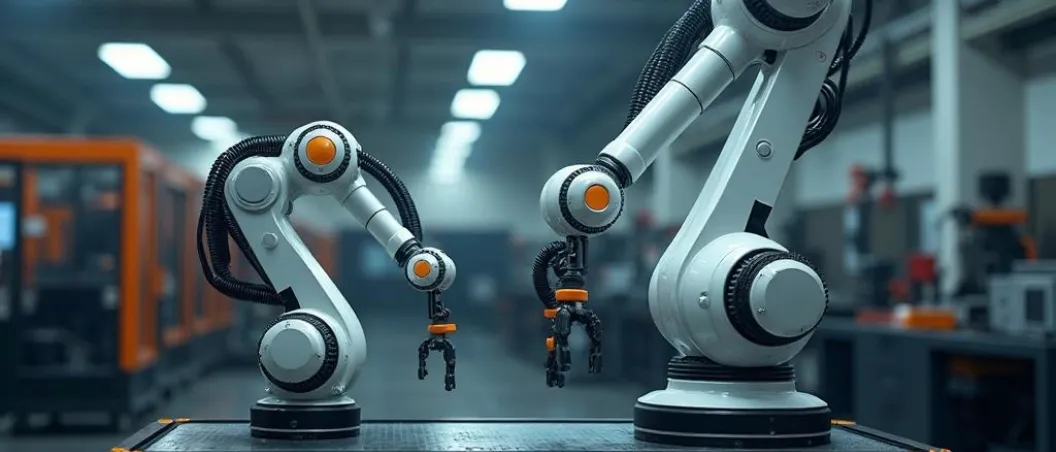
When planning robotic arm integration services for machining automation, manufacturers must understand the fundamental differences between cobots and traditional industrial robots. Each solution offers distinct advantages for specific applications.
Factor Cobots Industrial Robots
Initial Investment $25,000 - $50,000 $50,000 - $150,000
Setup Time 2-4 weeks 6-12 weeks
Safety Certification Minimal Extensive
Payload Capacity Up to 35 kg Up to 1,300 kg
The decision between cobots and industrial robots depends on your specific manufacturing requirements. Our team provides comprehensive assessments to determine the optimal automation solution for your San Diego facility.

Global demand for industrial robots continues to surge, with installations expected to grow by 6% to 575,000 units in 2025, surpassing 700,000 units by 2028. China remains the largest market, accounti…
Axton Robotics
Jan 10, 2025 — 7 min read
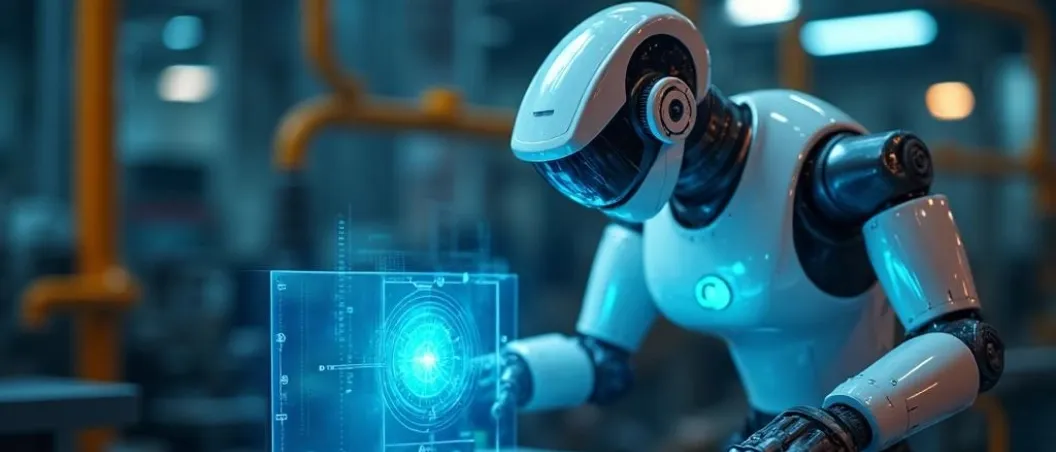
Smart manufacturing robotics now incorporate advanced AI vision systems that dramatically improve quality control processes. These robot vision systems provide real-time analysis, adaptive responses,…

Michael Nessem
Dec 5, 2024 — 2 min read