Why 2025 Is a Pivotal Year for Industrial Robotics
Global demand for industrial robots continues to surge, with installations expected to grow by 6% to 575,000 units in 2025, surpassing 700,000 units by 2028. China remains the largest market, accounting for over half of global deployments, while regions like India and North America are seeing robust growth driven by automotive, electronics, and general manufacturing. This momentum is fueled by several converging trends:
- AI-powered automation
- Human-robot collaboration
- Digital twins and virtual simulation
- Sustainable and energy-efficient design
- Modular and customizable robotics
By understanding these trends, industry leaders can capitalize on new opportunities and mitigate risks in an increasingly automated world.
Artificial Intelligence and Machine Learning: The Brain Behind Modern Robotics
AI integration is revolutionizing industrial robotics, enabling machines to interpret complex data, make real-time decisions, and optimize performance autonomously. In 2025, expect to see:
- Enhanced autonomy: Robots will handle advanced planning, pattern recognition, and predictive maintenance with minimal human intervention.
- Real-time adaptation: AI allows robots to dynamically respond to environmental changes, improving flexibility and uptime.
- Improved connectivity: Specialized AI facilitates seamless human-robot interaction and task execution, making robots more accessible and intuitive.
Key applications:
- Automated quality control using vision systems and machine learning to detect defects and optimize processes.
- Predictive analytics for maintenance, reducing downtime and extending equipment lifespan.
- AI-driven logistics and last-mile delivery robots, as seen in recent deployments in major metropolitan areas.
Collaborative Robots (Cobots): Redefining Workforce Dynamics
Cobots are designed to work safely alongside humans, transforming workflows in manufacturing, logistics, and even food processing. By 2025, cobots will feature:
- Increased autonomy: Advanced sensors and software enable cobots to perform complex tasks and adapt independently.
- Ease of use: Simplified programming and intuitive interfaces allow non-experts to operate cobots, expanding adoption among SMEs.
- Enhanced safety: Built-in safety features and compliance with new regulations (such as the European Machinery Regulation) ensure secure human-robot interaction.
Emerging niches:
- Food-grade cobots: Designed for strict hygiene standards, these robots are equipped with food-safe coatings and IP-rated protection, making them ideal for food processing environments.
- Flexible production: Cobots enable rapid switching between product variants and production lines, supporting mass customization and agile manufacturing.
Mobile Manipulators: Boosting Productivity in Dynamic Environments
Mobile manipulators combine autonomous mobility with robotic arms, allowing for efficient transport, assembly, and packaging in dynamic industrial settings. Their adoption is accelerating due to:
- Operational efficiency: Robots can handle repetitive tasks such as assembly, bolting, and packaging, reducing labor costs and improving throughput.
- Versatility: Mobile platforms navigate complex environments, adapting to changing layouts and production needs.
- Reduced downtime: Autonomous navigation and manipulation minimize bottlenecks and streamline workflows.
Digital Twin Technology: Virtual Simulation for Real-World Optimization
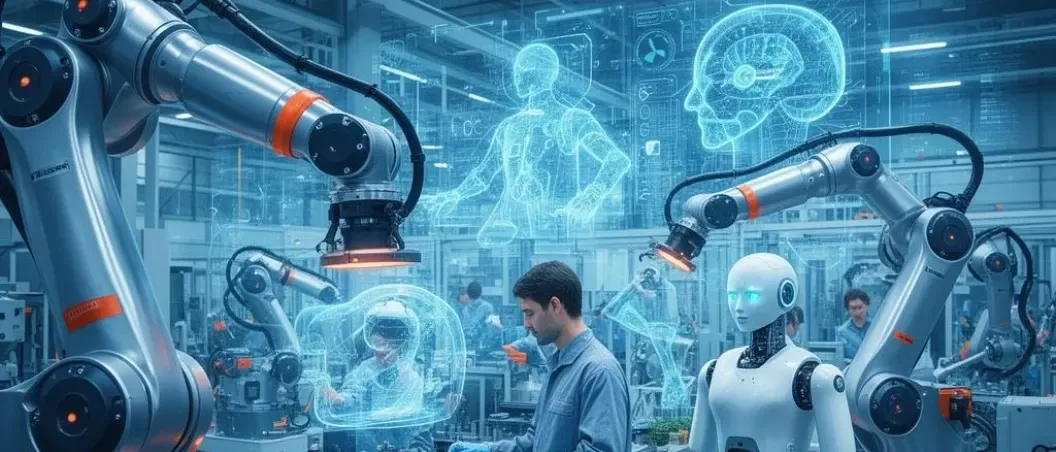
Digital twins create virtual replicas of robotic systems, enabling real-time analysis, testing, and optimization without physical risks. In 2025, digital twins will be integral to:
- Simulated testing: Virtual environments allow for scenario analysis, identifying potential failures before deployment.
- Performance optimization: Engineers can refine robot functionality and efficiency using data-driven simulations.
- Maintenance efficiency: Predictive models help prevent mechanical failures, reducing downtime and maintenance costs.
Industry impact: Digital twins accelerate innovation, support risk-free development, and enable continuous improvement in manufacturing and logistics.
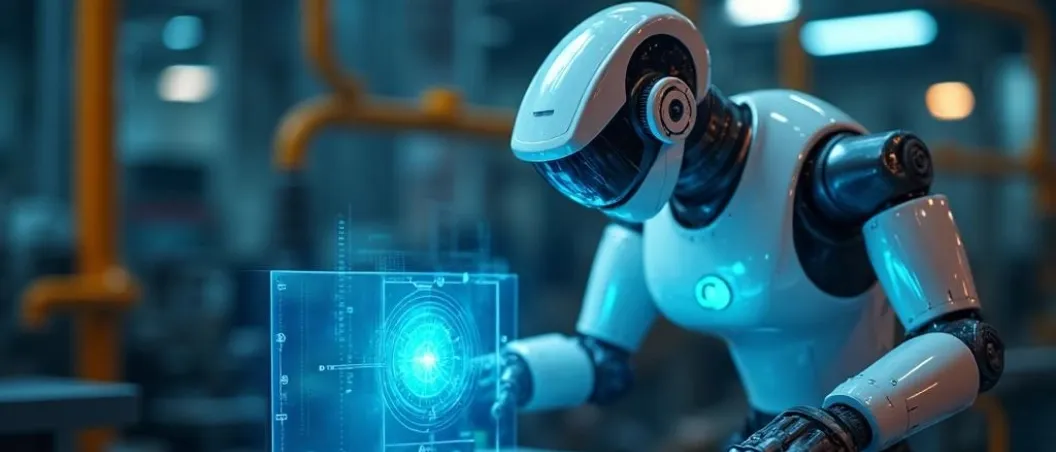
Humanoid Robots: Expanding the Frontier of Industrial Automation
Humanoid robots are moving from pilot projects to practical applications, particularly in manufacturing, healthcare, and hazardous environments. In 2025, expect:
- Improved mobility and dexterity: Humanoids can navigate complex spaces and perform tasks previously reserved for humans.
- Versatile applications: From assembly and logistics to inspection and personal assistance, humanoids are expanding their utility.
- Embodied AI: Advanced mechanics and AI enable humanoids to adapt, collaborate, and learn in real time.
Recent developments: Tesla's Optimus and Figure's AI-powered humanoids are being deployed on a small scale in manufacturing, signaling broader adoption in the near future.
Customization and Modularity: Tailoring Robotics to Industry Needs
Modular robotics allow for interchangeable components and industry-specific solutions, meeting the unique requirements of diverse sectors. Key trends include:
- Modular designs: Robots can be reconfigured for different tasks, enhancing flexibility and ROI.
- Industry-specific solutions: Tailored robots address challenges in manufacturing, inspection, and maintenance.
- Adaptable interfaces: Accessible software platforms (e.g., ROS) simplify configuration and integration.
Business value: Customization enables companies to respond quickly to market changes and optimize processes for specific applications.
Sustainable Robotics and Energy Efficiency: Building a Greener Future
Sustainability is a core focus for robotics development in 2025, with manufacturers prioritizing eco-friendly materials and energy-efficient systems. Innovations include:
- Recyclable materials: Robots constructed with sustainable components reduce environmental impact.
- Energy optimization: Advances in battery technology and power management improve efficiency and lower costs.
- Green manufacturing practices: Robotics manufacturers are adopting processes that minimize waste and carbon footprint.
Strategic advantage: Sustainable robotics align with global efforts to reduce emissions and meet regulatory requirements, enhancing brand reputation and compliance.
Smart Data Integration: Unlocking Real-Time Insights
Integrated data platforms are breaking down silos, providing manufacturers with real-time insights for better decision-making. In 2025, smart data integration will:
- Enable predictive analytics: Combining sensor data, machine logs, and business software for proactive maintenance and process optimization.
- Reduce waste: Data-driven production aligns output with demand forecasts, minimizing overproduction and resource use.
- Support sustainability: Real-time monitoring helps companies track energy consumption and environmental impact.
Safety and Regulatory Compliance: Future-Proofing Automation
Safety is paramount as robotics become more integrated into industrial environments. The upcoming European Machinery Regulation (Regulation (EU) 2023/1230) will enforce stricter requirements for risk assessment, cybersecurity, and documentation. Companies are:
- Adopting future-proof automation solutions: Ensuring compliance with new standards to minimize legal and operational risks.
- Integrating advanced safety features: Robots are equipped with cooperative safety mechanisms and cyber-resilient operating systems.
- Enhancing transparency: Detailed documentation and risk assessments build trust and facilitate regulatory approval.
Regional Trends and Market Dynamics
China: Dominates global robot installations, with domestic suppliers capturing a majority market share. Growth is expected to continue at 10% annually through 2028.
Japan: Maintains its position as the second-largest market, with steady growth in operational stock.
India: Rapidly expanding, driven by automotive and electronics sectors.
North America and Europe: Focused on advanced manufacturing, logistics, and compliance with evolving safety regulations.
Frequently Asked Questions About Industrial Robotics in 2025
What are the key trends shaping industrial robotics in 2025?
- AI integration, collaborative robots, digital twins, sustainability, and modular design.
How are cobots changing the manufacturing landscape?
- Cobots improve safety, flexibility, and ease of use, making automation accessible to SMEs and supporting mass customization.
What role do digital twins play in robotics?
- They enable virtual testing, performance optimization, and predictive maintenance, reducing risks and costs.
Are humanoid robots ready for industrial deployment?
- Humanoids are being deployed in manufacturing on a small scale, with expanding capabilities in assembly, logistics, and hazardous environments.
How is sustainability addressed in robotics?
- Through recyclable materials, energy-efficient systems, and green manufacturing practices.
Which industries benefit most from mobile manipulators?
- Manufacturing, logistics, and assembly, where mobility and precision are critical.
Next Steps: Leveraging Robotics for Competitive Advantage
The industrial robotics trends of 2025 offer unprecedented opportunities for innovation, efficiency, and sustainability. By embracing AI-powered automation, collaborative robots, digital twins, and modular design, companies can optimize operations and stay ahead in a rapidly evolving market. As regulatory standards tighten and sustainability becomes a business imperative, investing in future-proof robotics solutions is essential.
To explore how your organization can harness these trends, visit Axton Robotics for expert guidance, cutting-edge products, and tailored automation strategies. Whether you're seeking to deploy cobots, integrate digital twins, or build a sustainable robotics ecosystem, Axton Robotics delivers the experience, expertise, and trustworthiness needed to succeed in 2025 and beyond.
Stay informed, innovate boldly, and transform your operations with the latest in industrial robotics. For more insights and solutions, connect with Axton Robotics today.